FreeRDP: The Open-Source RDP Implementation That Powers Linux Remote Desktop
A free, Apache-licensed implementation of Microsoft's Remote Desktop Protocol. 15 years of development, 23k+ commits, 419 contributors, and 79 releases. FreeRDP is the RDP library under the hood of Remmina, GNOME Connections, KRDC, and most Linux RDP clients. It's also a standalone client, server, and proxy.
FreeRDP is a free remote desktop protocol library and clients
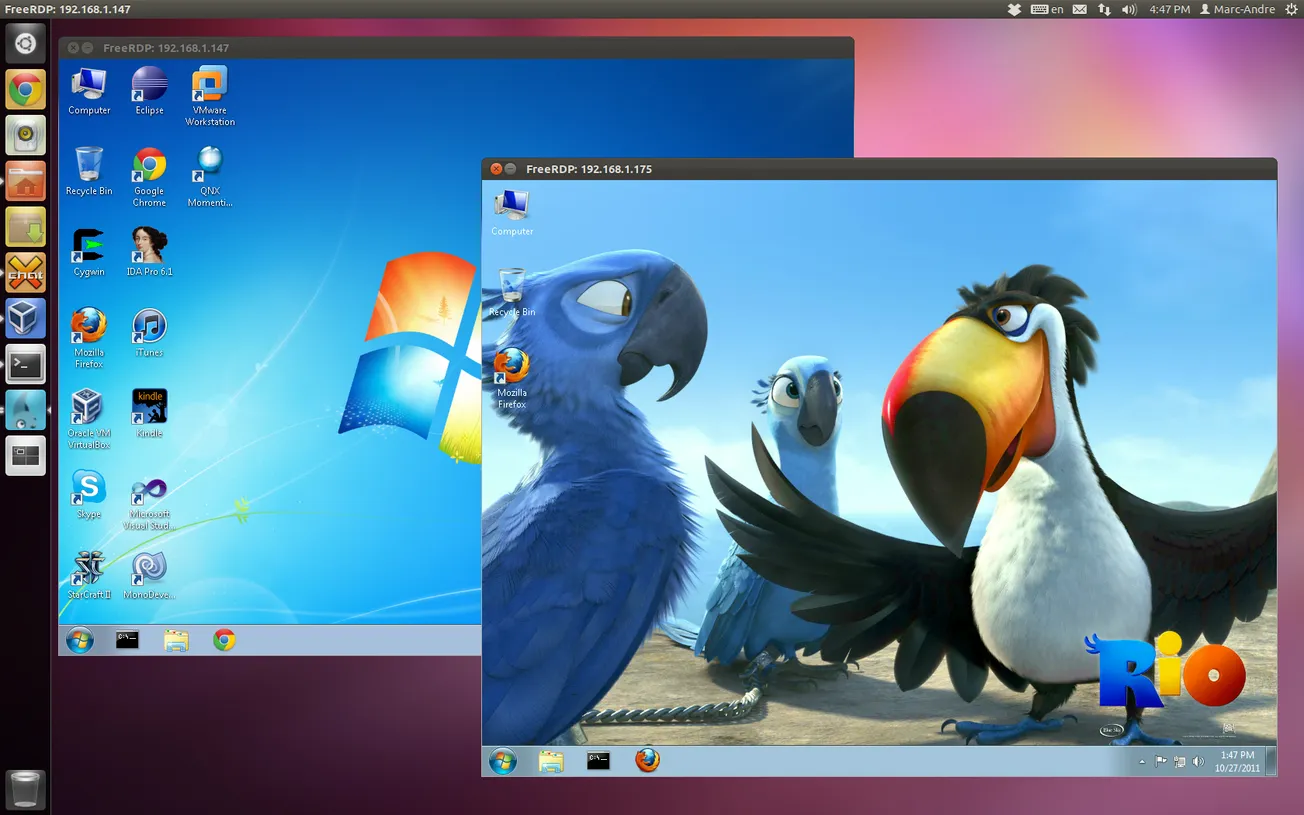
Microsoft's Remote Desktop Protocol is the standard for remote access to Windows machines, but Microsoft doesn't provide an official RDP client for Linux, macOS (beyond a basic app), Android, or iOS. That gap has been filled for over 15 years by FreeRDP — an open-source implementation of the full RDP protocol that serves as both a standalone client and a library that other applications build on top of.
If you've ever used Remmina, GNOME Connections, or KRDC to connect to a Windows machine from Linux, you were using FreeRDP under the hood. It's the de facto RDP engine for the non-Windows world, and with 23,291 commits across 419 contributors and 79 releases (latest v3.24.0 in March 2026), it's one of the most actively developed open-source infrastructure projects in the remote desktop space.
// What FreeRDP Provides
// Protocol Features
FreeRDP implements the RDP protocol comprehensively, including the virtual channel system that handles most of the features users care about in a remote desktop session:
| Feature | Description |
|---|---|
| Clipboard | Bidirectional text, image, and file transfer between local and remote |
| Audio | Sound redirection from remote to local, plus microphone input |
| Drive Redirection | Mount local drives on the remote machine for file access |
| Printer Redirection | Use local printers from the remote session |
| Smart Card | Smart card authentication passthrough |
| Multi-Monitor | Span sessions across multiple displays |
| Graphics Codecs | RemoteFX, GFX pipeline, H.264/AVC, progressive rendering |
| Gateway | RD Gateway and TS Gateway support for NAT traversal |
| NLA / TLS | Network Level Authentication and TLS encryption |
| Serial / Parallel | Legacy port redirection (yes, still maintained) |
// Architecture
The architecture separates the protocol implementation (libfreerdp) from the client frontends and server implementations. This is what makes FreeRDP useful both as a standalone tool and as a library. The core handles the RDP state machine, PDU processing, virtual channel management, graphics decoding, and security negotiation. Client implementations then just need to handle platform-specific rendering and input.
The codebase is primarily C (87.8%) with C++ for some components, Objective-C for macOS/iOS clients, and Java for the Android client. The build system uses CMake with extensive CI across platforms including ARM, PowerPC, RISC-V, FreeBSD, macOS, and MinGW cross-compilation.
// Platform Support
| Platform | Client | Notes |
|---|---|---|
| Linux (X11) | xfreerdp | Most mature client, full feature support |
| Linux (Wayland) | sdl-freerdp | SDL3-based, no longer experimental as of v3.16 |
| Windows | wfreerdp | Native Windows client |
| macOS | Mac client | Objective-C based |
| iOS | iOS client | Mobile client |
| Android | Android client | Java-based, builds updated in v3.13 |
// The Ecosystem Role
This ecosystem role makes FreeRDP's 15.3k forks less surprising — many of those are downstream projects and Linux distribution maintainers. The 374 watchers reflect infrastructure teams and downstream maintainers tracking the project. With Microsoft's Open Specifications providing the protocol documentation, FreeRDP serves as the open-source bridge that keeps RDP interoperable across platforms.
// Considerations
Configuration complexity. FreeRDP is powerful but not simple. The xfreerdp command-line interface has hundreds of flags and options. Getting the right combination of settings for a specific server configuration (NLA, gateway, graphics mode, redirection) often requires consulting documentation. GUI wrappers like Remmina exist specifically to address this.
Wayland maturity. While the SDL3-based Wayland client graduated from experimental status in v3.16, the X11 client remains significantly more battle-tested. Users on Wayland-only setups may encounter edge cases that don't exist on X11.
Documentation gaps. Despite the project's maturity, documentation can be sparse or outdated for some features. The wiki is the primary resource, supplemented by the API documentation and a FAQ. For advanced use cases, reading the source or asking in the Matrix room is often necessary.
Build complexity. Compiling FreeRDP from source involves a substantial dependency tree (OpenSSL, FFmpeg for H.264, PulseAudio/PipeWire for audio, various X11/Wayland libraries). Most Linux distributions package FreeRDP, but those packages may lag behind the latest release.
// Bottom Line
FreeRDP is one of those foundational open-source projects that quietly powers a massive amount of infrastructure. If you connect to a Windows machine from Linux, there's a very high chance FreeRDP is involved. With 23,291 commits, 419 contributors, and 79 releases over 15 years, it's among the most actively maintained protocol implementations in the open-source ecosystem.
The latest v3.24.0 release (March 2026) continues active development with C23 support, improved SDL3 client, and ongoing protocol feature parity. For sysadmins managing Windows infrastructure from Linux, developers building remote desktop tooling, or anyone who needs cross-platform RDP access, FreeRDP is the project that makes it possible.